Services Locations Guides How It Works FAQ Get a Free Quote
Aerial view of a large-scale pipe and foundation construction site

Pipe Bursting

A bursting head is pulled through the existing pipe from the receiving pit back to the launch pit. As it travels, it fractures the old pipe outward into the surrounding soil while simultaneously pulling a new, full-diameter pipe into place behind it.

Because the new pipe is a complete replacement rather than a liner, pipe bursting can also increase the line's diameter in the same pass — useful when the original pipe was undersized.

Full replacement Can upsize diameter Collapsed or offset pipe

Best suited for

  • Severely cracked, collapsed, or misaligned pipe
  • Lines needing a larger diameter than the original
  • Cast iron, clay, or older material beyond lining tolerances

Considerations

  • Requires enough clearance for the fracture zone around the old pipe
  • Not ideal in tight proximity to other buried utilities
Close-up of engineered industrial pipe flanges and fittings

CIPP Lining

A flexible liner saturated with resin is inserted into the existing pipe — either pulled or inverted into place — then cured using hot water, steam, or UV light. The result is a new, jointless pipe formed inside the old one, adhering tightly to its inner wall.

Because the original pipe stays in the ground and acts as a form, CIPP is the least invasive trenchless method and typically the fastest for pipe that's structurally sound enough to support a liner.

No fracturing Jointless result Root & joint leaks

Best suited for

  • Cracked, root-intruded, or leaking-joint pipe that's still structurally round
  • Jobs where minimizing access points matters most
  • Pipe runs with multiple bends

Considerations

  • Slightly reduces internal diameter (liner thickness)
  • Not a fit for fully collapsed sections
Large-diameter sewer and drainage pipes stacked at a job site

Sewer Line Repair

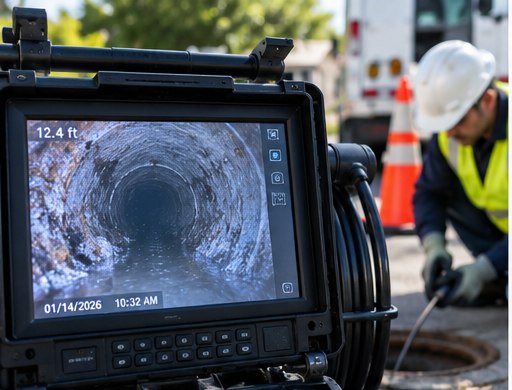
Main and lateral sewer lines are diagnosed with a camera inspection, then rehabilitated with pipe bursting or CIPP lining depending on pipe condition. This covers everything from a single root-damaged section to a full lateral from the house to the municipal connection.

Main lines Lateral lines Root intrusion

Common signs of a failing sewer line

  • Slow drains across multiple fixtures at once
  • Recurring backups or sewage odor near the yard
  • Unusually lush or sunken patches over the line's path
  • Gurgling from drains after other fixtures are used
Blue potable water main pipe exposed in an excavation trench

Water Line Repair

Pressurized potable water lines can also be relined or replaced trenchlessly, restoring flow and pressure without a multi-day service outage. Because these lines carry drinking water, lining materials are held to potable-water certification standards.

Pressurized lines Potable-rated liners Minimal service interruption

Common signs of a failing water line

  • Persistent low pressure at every fixture
  • Unexpectedly high water bills
  • Wet or unusually green patches along the line's path
  • Discolored water from older metal supply lines

Not sure which method fits your line?

Send us the details and a specialist will confirm the right approach after inspection.

Get a Free Quote