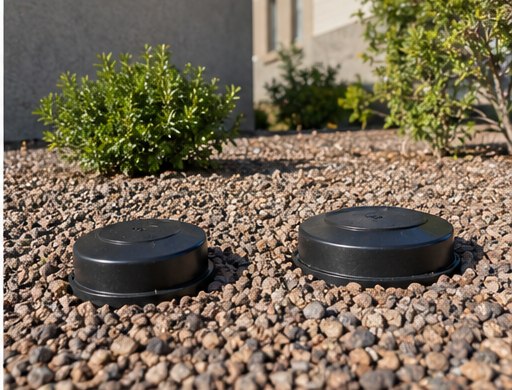
We connect West Valley homeowners and property managers with vetted trenchless specialists — caliche-hardened desert soil and mature landscaping make open trenching slow and expensive here. Trenchless methods fix the line through two small pits instead. See How It Works
Trenchless repair replaces or rehabilitates an underground pipe through small access points at either end — instead of excavating the full length of the line. Two access pits, one continuous underground path, and the old pipe is gone or lined by the end of the job.
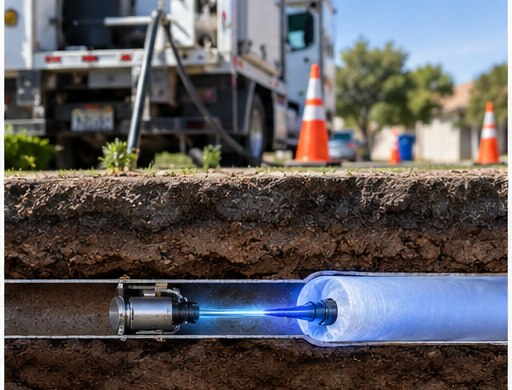
Pipe bursting pulls a new pipe through the old one, fracturing the original outward as it goes. CIPP lining cures a resin liner in place inside the existing pipe, forming a new pipe within the old one.
Compare the methodsThe right method depends on the pipe's material, condition, and what's sitting above it. A camera inspection settles the question before any work begins.
A new pipe is pulled through the old one, fracturing it outward. Best for full replacement of severely damaged lines.
Learn moreA resin-saturated liner cures inside the existing pipe, forming a jointless new pipe within it. Minimally invasive, no fracturing.
Learn moreMain and lateral sewer lines rehabilitated end to end, including root-damaged and offset-joint sections.
Learn morePressurized potable water lines relined or replaced trenchlessly, restoring flow without cutting off service for days.
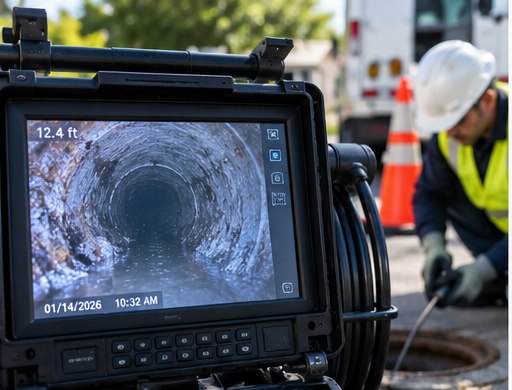
Learn moreA video scope runs the length of the line to locate the damage, measure the pipe, and confirm material and diameter before anything is quoted.
You see the footage too — not just a verdict.
Based on what the inspection shows, the right method is selected and two small access points are marked — typically the only ground disturbance for the entire job.
Your driveway, lawn and hardscape stay where they are.
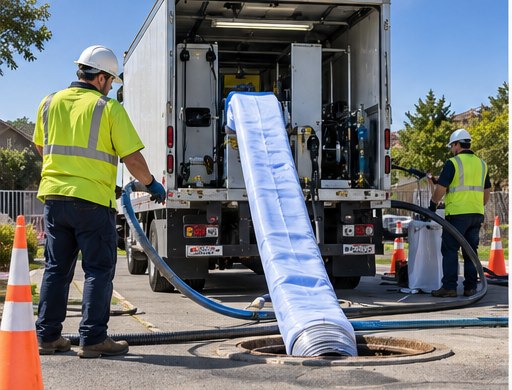
The new pipe or liner is installed through the access points in a single continuous run, most jobs completed in one to two days.
One crew, one visit, no open trench.
A second video pass confirms the line is clear, sealed end to end, and performing — then the footage and the warranty are handed to you.
Proof it was done right, in writing.
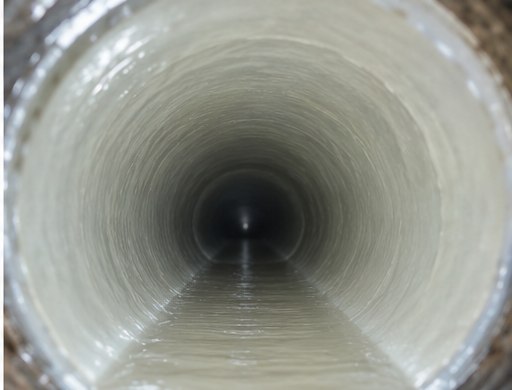
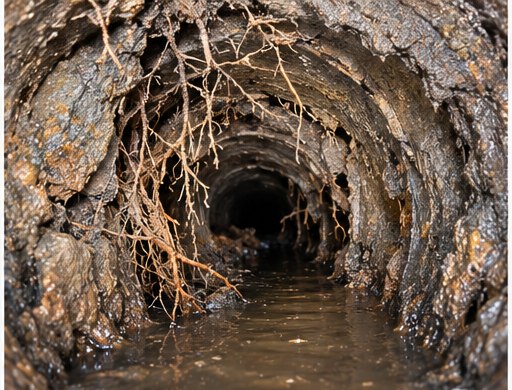
The same length of sewer, photographed down the same bore before and after cured-in-place lining. No excavation happened between these two frames — the crew worked through existing access points.
Requests are serviced by our licensed trenchless service providers, qualified for your specific line problem.
Fast-growing West Valley neighborhoods mix brand-new pipe with mid-century lines at the end of their life — the specialists below serve Glendale, Peoria, Surprise, Avondale and Buckeye with no-dig renewal.
Compare the trenchless specialists serving West Valley. Companies marked Verified passed our six checks: license, $1M+ insurance, owner interview, their own equipment, their own crews and a clean review record.
Glendale, Peoria, Surprise, Avondale and Buckeye contain two very different housing stocks, and they fail in two very different ways.
Conditions vary block to block. A camera inspection is the only way to know which method your line actually needs — most listed providers credit it toward the repair.
The Valley's cemented hardpan can require jackhammering or rock-capable equipment to trench through. That is a real dollar difference: the harder the ground, the wider the gap between an excavation quote and a trenchless one. Two access pits through caliche is a very different job from forty feet of trench through it.
The established core near downtown Glendale and central Peoria runs on original clay and cast-iron laterals. Clay fails at the joints, roots find those joints, and the line tightens until it backs up.
Homes from the late-1990s and 2000s growth wave have PVC that has not corroded at all — but soil settlement under fast-built subdivisions creates low spots, or bellies, where waste pools. That is a grade problem, not a material problem, and it needs a different fix than lining.
Pavers, stamped concrete, gravel xeriscape and mature desert landscaping all have to be removed and rebuilt after a trench. Trenchless work leaves them in place, which is usually where the real savings show up.
| Job type | Typical 2026 range |
|---|---|
| Sectional / spot liner (one failed joint) | $1,000 – $4,000 |
| CIPP lining, typical 30–50 ft lateral | $4,000 – $9,000 |
| CIPP lining, long run 50–100 ft | $8,000 – $15,000 |
| Pipe bursting, full replacement | $60 – $200 per foot |
| Camera inspection (often credited toward the repair) | $150 – $600 |
If your home was built after about 1995, ask the inspector specifically whether the problem is a belly rather than a crack. A liner will not fix a low spot in the line — and a contractor who quotes lining without addressing grade is selling you a repair that will back up again.
Go deeper: Phoenix sewer replacement costs · Pipe bursting vs. lining · Camera inspection cost
Typical Glendale, Peoria and Surprise residential jobs run $4,000 to $15,000 depending on the length of the run and access. Spot repairs on a single joint are considerably less. Caliche tends to push the excavation alternative up faster than it pushes trenchless up, because trenchless only needs two small pits.
Yes. Sewer and drain work in Arizona requires an Arizona Registrar of Contractors license. Providers marked Verified have had their ROC license, liability insurance, equipment, crews and reviews checked by us; for anyone else, ask for the ROC number and look it up on the Registrar's site before you hire.
That is the point of it. Lining and bursting work through two small access points rather than an open trench, so hardscape, gravel, and established desert plantings generally stay where they are.
It can make it harder. Pipe bursting pushes the old pipe outward into surrounding soil, and heavily cemented caliche resists that. A camera inspection and a soil read tell the installer whether bursting or lining is the right call on your lot.
Yes, and it is common in the West Valley. Newer PVC does not corrode, but ground settlement under homes built during the fast growth years can create a belly that holds waste and causes repeat backups.
Tell us about your line problem and we'll connect you to one of our qualified trenchless service providers for your area.