We connect Katy & Sugar Land homeowners and property managers with vetted trenchless specialists — gumbo clay, heavy rain, and aggressive root intrusion make Houston sewer lines fail early and often. Trenchless methods fix them fast, with nothing torn up. See How It Works
Trenchless repair replaces or rehabilitates an underground pipe through small access points at either end — instead of excavating the full length of the line. Two access pits, one continuous underground path, and the old pipe is gone or lined by the end of the job.
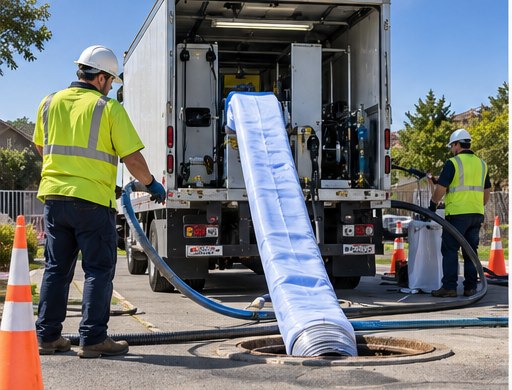
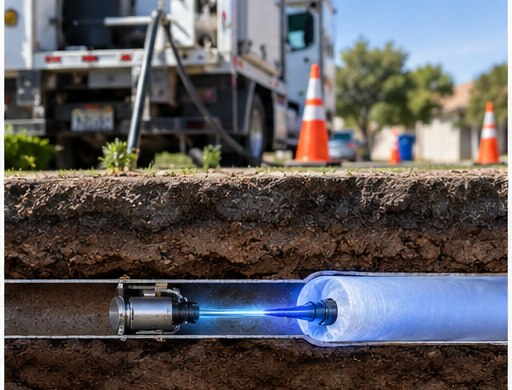
Pipe bursting pulls a new pipe through the old one, fracturing the original outward as it goes. CIPP lining cures a resin liner in place inside the existing pipe, forming a new pipe within the old one.
Compare the methodsThe right method depends on the pipe's material, condition, and what's sitting above it. A camera inspection settles the question before any work begins.
A new pipe is pulled through the old one, fracturing it outward. Best for full replacement of severely damaged lines.
Learn moreA resin-saturated liner cures inside the existing pipe, forming a jointless new pipe within it. Minimally invasive, no fracturing.
Learn moreMain and lateral sewer lines rehabilitated end to end, including root-damaged and offset-joint sections.
Learn morePressurized potable water lines relined or replaced trenchlessly, restoring flow without cutting off service for days.
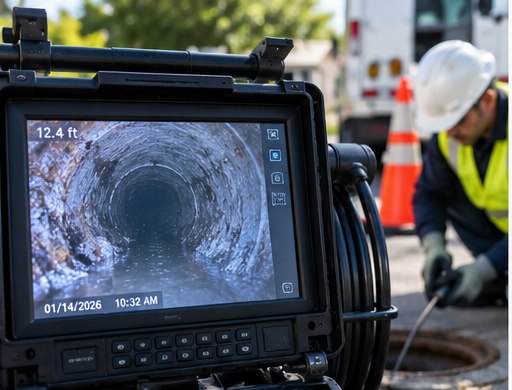
Learn moreA video scope runs the length of the line to locate the damage, measure the pipe, and confirm material and diameter before anything is quoted.
You see the footage too — not just a verdict.
Based on what the inspection shows, the right method is selected and two small access points are marked — typically the only ground disturbance for the entire job.
Your driveway, lawn and hardscape stay where they are.
The new pipe or liner is installed through the access points in a single continuous run, most jobs completed in one to two days.
One crew, one visit, no open trench.
A second video pass confirms the line is clear, sealed end to end, and performing — then the footage and the warranty are handed to you.
Proof it was done right, in writing.
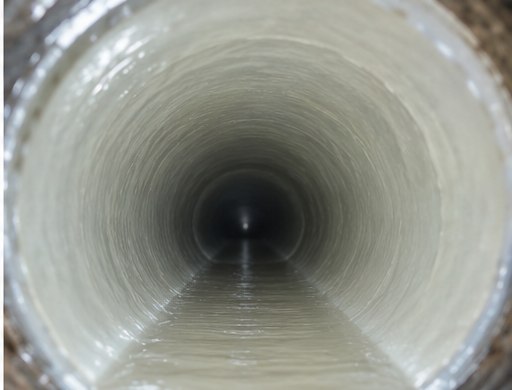
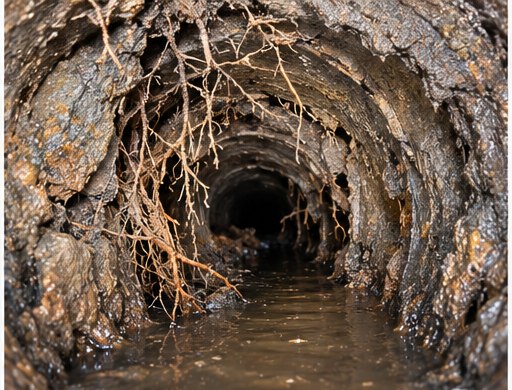
The same length of sewer, photographed down the same bore before and after cured-in-place lining. No excavation happened between these two frames — the crew worked through existing access points.
Requests are serviced by our licensed trenchless service providers, qualified for your specific line problem.
West Houston's master-planned communities are reaching the age where builder-grade laterals give out under mature oaks and stamped concrete — the specialists below serve Katy, Sugar Land, Richmond, Cypress and Missouri City.
Compare the trenchless specialists serving Katy & Sugar Land. Companies marked Verified passed our six checks: license, $1M+ insurance, owner interview, their own equipment, their own crews and a clean review record.
Katy, Sugar Land, Richmond, Cypress and Missouri City sit on some of the most punishing soil in the country for buried pipe — and the neighborhoods here have now reached exactly the age where that shows up.
Conditions vary block to block. A camera inspection is the only way to know which method your line actually needs — most listed providers credit it toward the repair.
Southeast Texas clay swells when it is wet and shrinks hard when it is dry. Every wet-dry cycle works the line a little more. Joints separate, the pipe offsets, and eventually roots or soil find the opening. This is the dominant cause of lateral failure across Fort Bend and west Harris County.
Much of Katy and Sugar Land was built from the 1980s through the 2000s. Builder-grade laterals installed then are now decades into that shrink-swell cycle, which is why failures cluster in neighborhoods that still look new.
The mature canopy that makes these neighborhoods desirable is also a root system actively hunting moisture. A joint that has pulled even slightly apart is an open invitation, and roots will fill a line completely once they are inside.
Restoring a trenched front yard to HOA standards is its own project. Trenchless work through two small pits sidesteps most of that.
| Job type | Typical 2026 range |
|---|---|
| Sectional / spot liner (one failed joint) | $1,000 – $4,000 |
| CIPP lining, typical 30–50 ft lateral | $4,000 – $9,000 |
| CIPP lining, long run 50–100 ft | $8,000 – $15,000 |
| Pipe bursting, full replacement | $60 – $200 per foot |
| Camera inspection (often credited toward the repair) | $150 – $600 |
Because foundation movement and sewer failure share a root cause here, a cracked slab and a failing lateral often show up together. If you are already dealing with foundation work, have the sewer line scoped at the same time — finding out afterward is the expensive order to do it in.
Go deeper: Houston sewer replacement costs · Tree roots in a sewer line · Trenchless repair cost guide
Most residential jobs in west Houston run $4,000 to $15,000, driven mainly by the length of the run. Larger lots in Katy and Richmond often mean longer laterals, which is the single biggest factor in the price.
Not with the right method. A cured-in-place liner is jointless end to end, and a burst-in HDPE line is fused rather than jointed — so the separated-joint failure mode that expansive clay causes no longer has a joint to attack.
Cutting roots clears the line temporarily; they return through the same opening. Sealing the pipe is what stops it, because roots enter at cracks and joints and a liner eliminates both.
For work entirely underground through two small access pits, usually not — but rules vary by community, and it is worth a call before the crew arrives. Your provider can tell you what they typically encounter in your neighborhood.
Scope the line first. Both problems trace back to the same soil movement, and repairing a lateral after new foundation work is finished can mean disturbing what you just paid for.
Tell us about your line problem and we'll connect you to one of our qualified trenchless service providers for your area.